
Joenit Music at the heart of electronics
Joenit Totem Acoustic Operated by Joenit

Totem Acoustic

The history behind the brand

Totem Acoustic has designed and built loudspeakers in Montreal since 1987, when a mathematics teacher named Vince Bruzzese decided that the loudspeaker he was searching for would have to be worked out, not bought. Joenit found the result at CES in Las Vegas in 1995 — a small pair of monitors doing something their size did not explain — and has carried Totem into the Benelux and France ever since. The arithmetic has never changed: the cabinet is a component, not a container; drivers and crossovers are built to the design, not ordered from a catalogue; and the reward is a soundstage that stands free of the boxes entirely. A Totem stays in the range for as long as it is the right answer — some models for decades — and after nearly forty years Vince Bruzzese still does the designing. Joenit's part is unchanged too: making sure you can hear a pair, properly set up, before you buy.

Chapter 01

A mathematics teacher who wanted to be moved

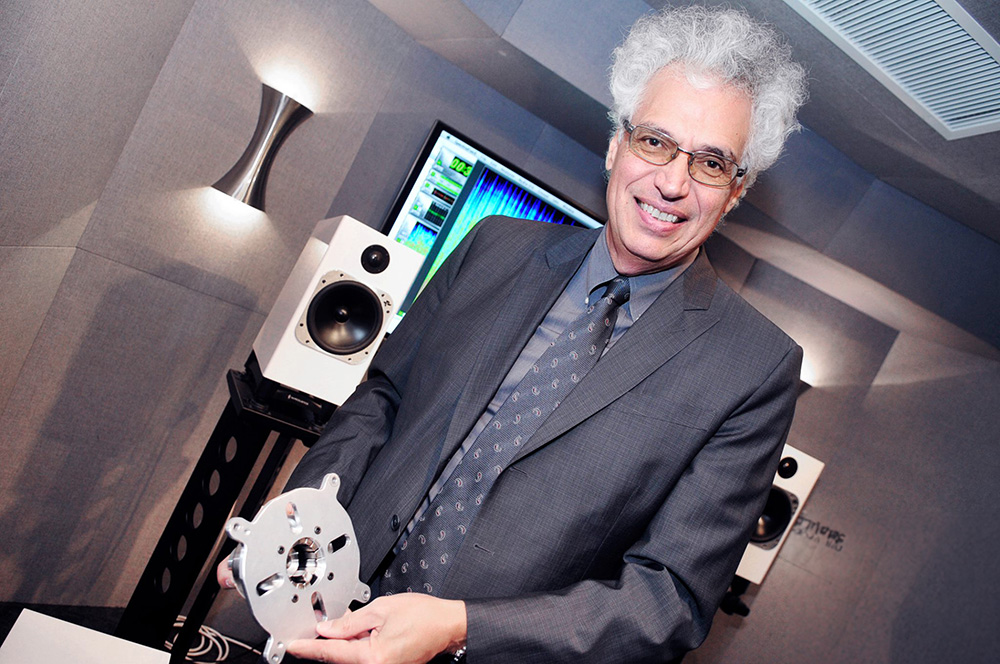
Vince Bruzzese taught high-school mathematics in Montreal and spent the early 1980s looking for a loudspeaker that would give him back what the musicians had actually put in. Not detail for its own sake, not weight, not spectacle - the emotion of the performance, intact. He listened to a great deal and bought nothing. Everything he heard did something well and something else at the expense of it.

A mathematician's response to that problem is not to buy better; it is to go and find the equation. In 1987 he founded Totem Acoustic around a small monitor called the Model One, and Canadian audio noticed immediately. Here was a compact box doing things a compact box was not supposed to be able to do.
A mathematics teacher who wanted to be moved

Chapter 02

The small box that should not have worked

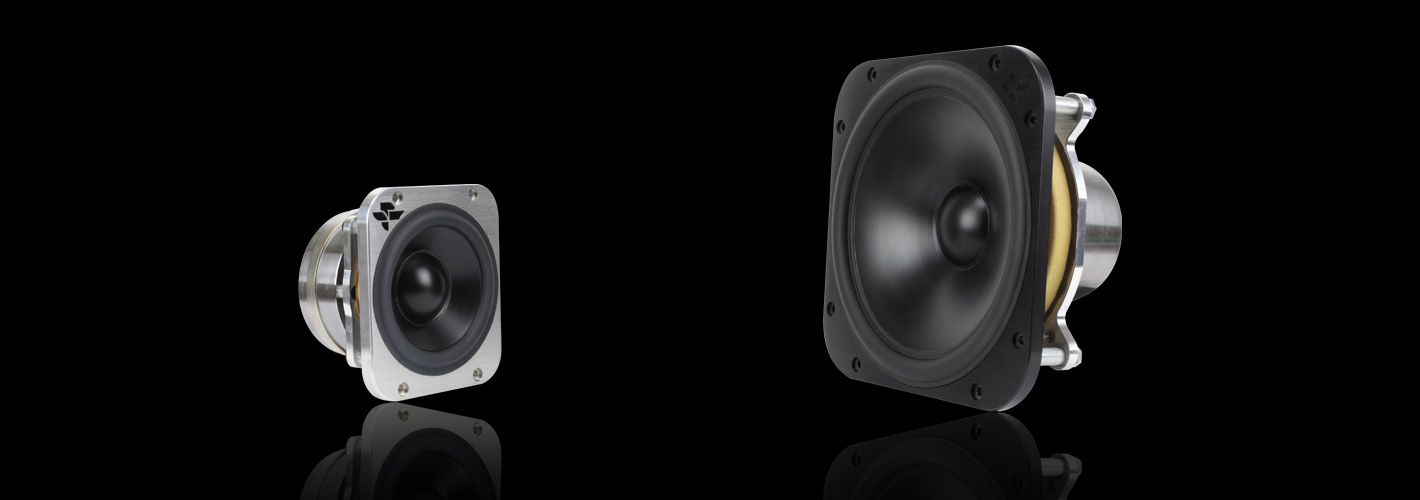
The trick of the Model One, and of every Totem since, is that the cabinet is not treated as a container but as a component. Lock-mitered joints, graded MDF chosen panel by panel, internal bracing worked out rather than guessed at. Drivers made in-house or built to Totem's own specification instead of ordered from a catalogue. Crossovers assembled by hand from exotic parts, kept as short and as simple as the design will allow.

What that buys is the thing Totem is known for: an image that stands free of the speakers entirely. Close your eyes in a well-set-up Totem room and the boxes disappear, leaving instruments hanging in the air where the recording put them. It is not a trick of tone, it is a consequence of phase behaviour and of a cabinet that refuses to add anything of its own. And it is why Totems are so often bought by people who thought they needed something much larger.

The small box that should not have worked

Chapter 03

Rules instead of fashion

Bruzzese set the company up with a short list of rules and has not moved off it in almost forty years. Cabinets stay discreet, because a loudspeaker has to live in a room somebody else has decorated. Off-axis behaviour has to stay natural, because nobody actually listens from a single fixed point. Aesthetics are timeless rather than trendy. And a design stays in the range for as long as it is still the right answer, not until the next show season.

That last rule is the one you feel as an owner. Totem models have famously long lives, and a pair bought years ago still sounds like the current thinking of the house rather than an abandoned direction. The exceptions prove the point: where Totem does go bold - the geometric cabinets and rich finishes of the Element and Wind families - it is a deliberate departure from the classic line, not a replacement for it.

Chapter 04

Las Vegas, 1995

Joenit met Totem at CES in Las Vegas in 1995. Anyone who has done that show knows what it is: a few hundred rooms, every one of them insisting. You learn to walk in, give a room ninety seconds, and walk out again. The Totem room was where that stopped working.

What kept the Joenit team in there was the same thing that had held Vince Bruzzese in Montreal ten years earlier - a small pair of speakers doing something the size of them did not explain. Joenit has been the importer ever since, for the Benelux, France and the United Kingdom. Thirty years on, the reason for carrying the brand has not changed and neither has the demonstration: put a pair of Totems in a room, play something you know well, and let people work out for themselves where the boxes went.

Chapter 05

Still Montreal, still Vince

Totem never became a badge on somebody else's factory. The company still designs and builds in Montreal, and Vince Bruzzese is still the one doing the designing - which in this industry, after nearly forty years, is rarer than it should be. The range has grown well past the little monitor it started with, into floorstanders, architectural and in-wall series, subwoofers and soundbars, but the arithmetic underneath has not changed.

Joenit's part is simply to make sure that a listener in Brussels, Lille or Manchester can hear one properly set up before they buy it, and that the dealer who sells it knows why the small one might be the right answer. That is the whole job of a distributor worth having.

Still Montreal, still Vince

Milestones

1987

Vince Bruzzese founds Totem Acoustic in Montreal, around the Model One.

1988

Joenit is founded in Mechelen.

1990

The isobaric Mani-2 shows how far a standmount can be pushed.

1995

Joenit meets Totem at CES in Las Vegas and becomes the importer.

2009

The Mani-2 Signature finally retires after nineteen years in the range.

2017

The Model 1 retires after three decades - a rare lifespan in this industry.

2026

Still designed and built in Montreal, still by Vince Bruzzese.

Joenit

And since 1995, in European living rooms.

That is the whole reason this site exists: a brand worth explaining, and a listener worth explaining it to. Explore the range, or find the dealer nearest you.

Classic · Bison · Elements · Tribe · Totem Kin · Architectural · Accessories